You can easily make it yourself! Heating registers: what is it, types
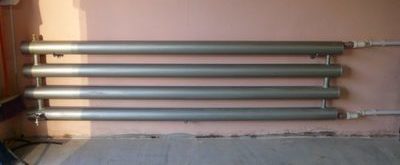
Registers - homemade radiators for heating various types of premises, made from pipe sections.
Exists several varieties similar devices, each of which has its own nuances in manufacturing.
Content
Heating registers: what are they, their characteristics
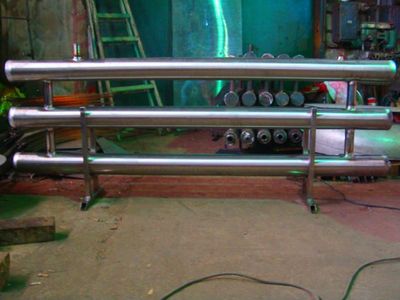
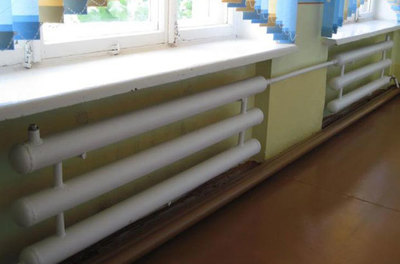
The registers are welded from metal. They are pipes connected to each other. There are two types: sectional and serpentine.
The devices are used in production, but they are also used in domestic conditions. This is due to their large dimensions and high water consumption for heating.
Accordingly, it is recommended to install them in large areas. Standard radiators are inferior to registers in heat transfer and hydraulic resistance. At the same time, the latter are cheaper and easier to install and operate.
Similar devices are recommended for installation in buildings with high sanitary requirements: kindergartens, primary schools and medical institutions. The devices are easy to clean from any kind of dirt.
Attention! Despite the positive aspects of registers, they use in apartment buildings is not desirablebut due to high resource consumption.
Most devices can be equipped with a heating element. This allows the creation of a combined heating system.
Types of registers for heating systems
The devices are divided into two categories. The technical characteristics of the system as a whole depend on the first. The circulation of the coolant through the pipeline depends on the second.
By material: steel, iron, aluminum and cast iron pipes
They highlight four types, although many other substances and their alloys can be used in production.
Steel
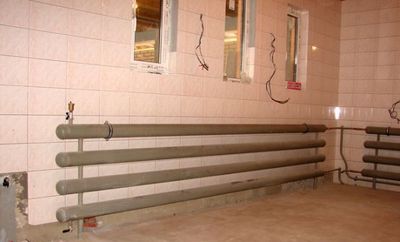
It is used more often than other metals.
This is due to several factors:
- cheapness;
- ease of processing;
- widespread prevalence;
- a wide variety of forms.
To create use welding technology.
Important! Sometimes registers are encountered made of galvanized or stainless steelIt should be taken into account that both options are expensive, and the first one is also difficult to process.
Smooth
This characteristic is possessed by iron pipes with a high carbon content. In simple terms, the base is steel. Electric welding is used to obtain a smooth surface. They withstand much greater pressure than ordinary ones, while being more attractive and slightly more expensive. Such registers are described in GOST 10704-91.
Aluminum
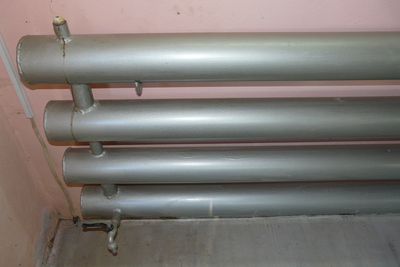
It is quite rare because welding requires special equipment, which is not easy to find. This is their only drawback: the material is cheap, conducts heat well, almost without losing the latter.
Some registers do made of steel-aluminum alloyBimetallic devices are difficult to obtain, but they have better characteristics compared to their analogues.
Cast iron
Almost never used because of the registers turn out to be bulky and heavy. It is not advisable to create racks specifically for them. In addition, the metal is fragile and can split or crack from impact. Accordingly, it is necessary to purchase protective covers that will reduce thermal conductivity. They are difficult to install, although they are reliable, and operation does not depend on the chemical composition of the pipes.
An almost identical description can be given to copper. It should be noted that it is much more expensive, but 3-5 times better transmits the temperature to the room. Accordingly, a small-sized piping is required. Among the disadvantages:
- fragility;
- poor compatibility with other metals;
- high requirements for the coolant;
- mandatory grounding.
The material should be chosen according to personal preferences., but it is also important to make calculations. They will help to calculate in advance the required dimensions of the installation with each type of metal.
By design: sectional, serpentine
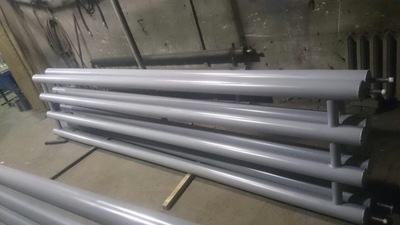
Sectional registers are made from sections of large diameter pipes. They are connected by water inlet pipes. The latter are made from the same metal, and their size must correspond to the supply piping.
It is recommended to install the devices together with a circulation pump, since they create excess hydraulic resistance.
Creating sectional devices is not difficult. The grinder cuts out several registers, connections between them. The system is assembled in one of two ways. In a continuous one, transitions are made from each edge, and in a stepped one - alternating. In the latter case, racks in the form of metal plates are placed at parallel sides.
Serpentine are made from a single section of pipe. It is bent, which makes the creation process difficult. This applies to independent work: such devices are not uncommon in production. To speed up the work, the extreme sides, near the turns, are connected to each other.
For safety between bends install small plates, which support the upper parts.
Sectional ones are slightly better for circulation, and are much easier to manufacture. Coil ones look a little more aesthetically pleasing and go well with a tubular electric heater.
Calculation of the required number of heating devices
The calculations depend on the amount of heat that needs to be transferred to the room. Formula:
Q = Pi * D * L * K * (Tr — To), Where:
- Pi — the number Pi.
- D — pipe diameter.
- L — the length of one part of the device.
- K — heat transfer coefficient of metal.
- Tr — temperature of the liquid in the system.
- To — room thermometer readings.
This calculation will help determine the value power of one register. Knowing the indicator required for the room, by dividing it we get the number of units that need to be made and delivered.
Making water batteries with heating elements with your own hands
The tools you will need are:
- Bulgarian;
- welding machine;
- measuring instruments;
- pencil or chalk for marking.
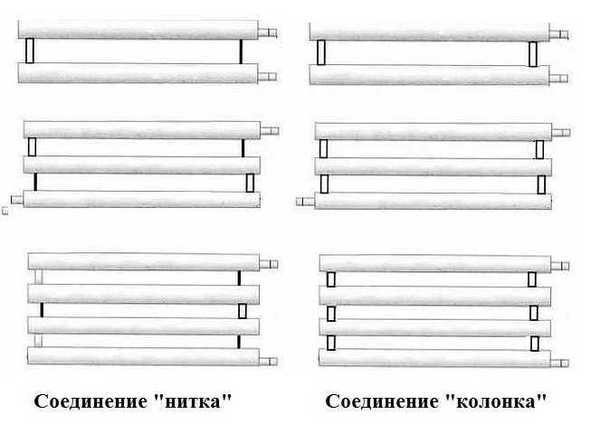
Photo 1. The diagram of the device of homemade registers. The connection of devices by the "thread" and "column" methods is shown.
Self-creation of devices is one of its advantages. Before starting work, you need to choose the material. The technical characteristics are described above. It is easiest to work with smooth steel and cast iron. It is more difficult with copper and aluminum.
For manufacturing, round pipes of the selected metal are required. The recommended diameter is in the range 40-70 mmA lower value will result in a bulky structure, while a higher value will result in heat loss due to long circulation.
The figure is also reduced by the shape, but it is easier to work with a round section. And you also need to choose a main line. The pipe must have a diameter similar to that in the piping. Otherwise, the balance will be lost. For tightness, you will need a corresponding substance, as well as end caps.
Having determined the material, proceed to the calculations described below. Then, you need to take measurements at the attachment point and draw a drawing of the proposed system. To do this It is recommended to invite a specialist.
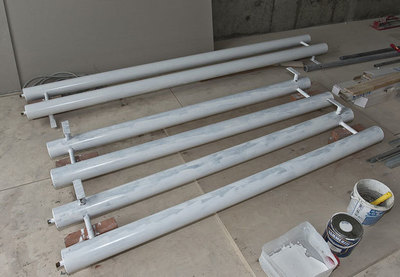
The manufacturing process of the device:
- Using a grinder, metal the blanks are cut into pieces of the required lengthWelding is not used to prevent the formation of a weld on the ends.
- They are cutting out holes for pipes.
- The latter are joining, very hot.
- They are attaching side plugs.
- To ensure safety It is recommended to install valves to drain water and air. Both are placed on top, at the maximum distance from the connection point to the piping.
Reference. Sometimes the system is upgraded by installing a heating element to the point furthest from the mount.
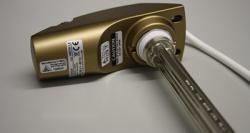
The tubular electric heater serves as a backup heat source, independent of the boiler operation. It continues to generate energy if an accident occurs or the main source is shut down. To operate the heating element, shut-off valves are required.
How to improve heat transfer
The efficiency of the work depends on the surface of the systemThe area of the devices is small, so they are often supplemented with metal plates. The latter are welded vertically, making the pipes artificially ribbed.
Another option implies welding of profile elements to the front of the device. They are left hollow: air entering from below will heat up and rise to the top.
Tubular Electric Generator also helps to increase the capacity. It works if the main system has stopped. Thus, the constant operation of the heating is maintained.
Photos of registers
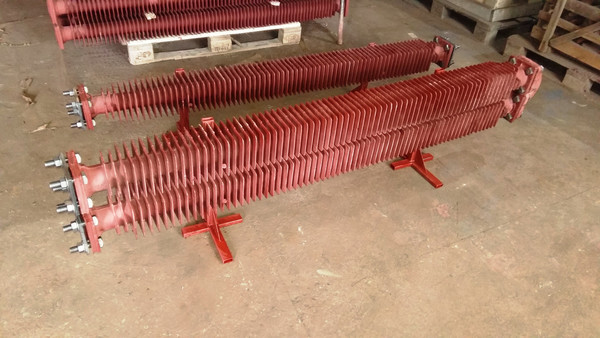
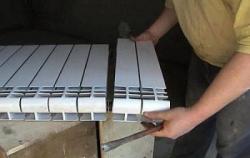
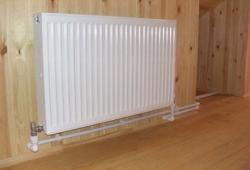
Photo 2. Heating registers made of cast iron. The devices are equipped with many plates that are attached to the pipes.
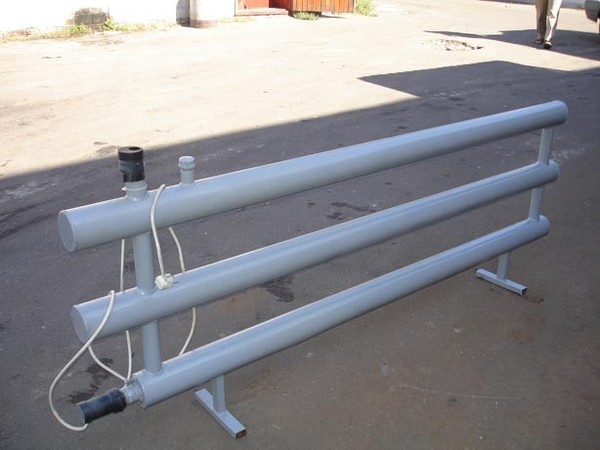
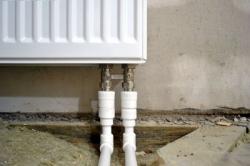
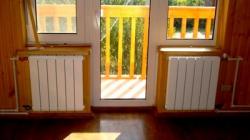
Photo 3. Sectional heating register, installed on the floor. The product is equipped with a heating element.
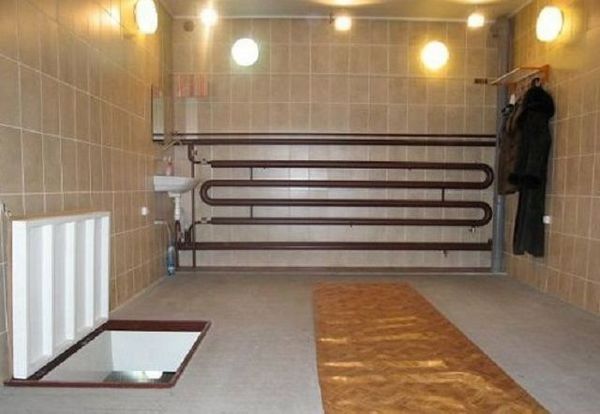
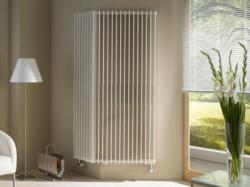
Photo 4. Coil-type heating register made of iron pipes. The device is mounted on the wall.
Useful video
Watch the video to learn how to make your own heating register.
Operating rules
To extend the service life you need to:
- Drawing up a schedule of inspectionsRegular inspection and repair will help eliminate problems as they arise.
- Periodic cleaning of the surface from dust, as well as the internal part from scale and corrosion. For the latter, pumping a large amount of water is recommended. Sometimes it is necessary to add chemicals.
- Status control mechanical connections, welding, threads and other parts before the start of the heating season. If necessary, damaged areas are repaired.